
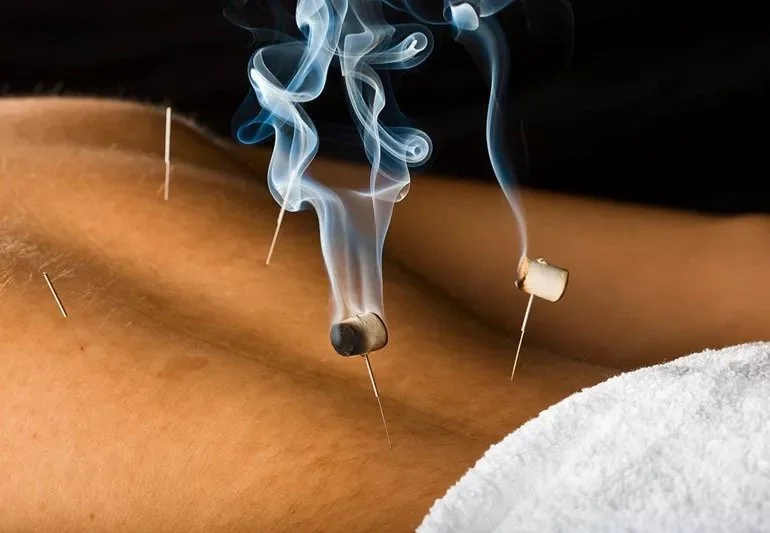
Moxa, short for moxibustion, is a traditional East Asian therapy that uses the dried leaves of the mugwort plant (Artemisia vulgaris). The herb is burned near or on the skin at specific acupuncture points to deliver heat and medicinal vapours. This thermal stimulus is believed to promote circulation, warm and invigorate the flow of Qi and blood, and support the body’s natural healing and immune responses.
Common uses and benefits
Pain relief: Often used for chronic musculoskeletal pain such as low back pain, knee arthritis and joint stiffness by improving local circulation and reducing muscle tension.
Improved circulation and warming: The heat from moxa helps dilate blood vessels and relieve cold-related pain and stiffness; it is frequently used where a warming effect is desired.
Digestive and gynecological support: Traditional use includes helping digestive complaints, menstrual irregularities and pelvic pain—particularly where cold or stagnation is thought to play a role.
Immune support and recovery: Moxa is traditionally used to strengthen Yang energy and support immune function, often applied in chronic or recurrent conditions to aid recovery.
Complement to acupuncture: Adding moxa to acupuncture can deepen stimulation, extend treatment effect and be especially helpful when warming is indicated.
Moxa, short for moxibustion, is a traditional East Asian therapy that uses the dried leaves of the mugwort plant (Artemisia vulgaris). The herb is burned near or on the skin at specific acupuncture points to deliver heat and medicinal vapours. This thermal stimulus is believed to promote circulation, warm and invigorate the flow of Qi and blood, and support the body’s natural healing and immune responses.
Common uses and benefits
Pain relief: Often used for chronic musculoskeletal pain such as low back pain, knee arthritis and joint stiffness by improving local circulation and reducing muscle tension.
Improved circulation and warming: The heat from moxa helps dilate blood vessels and relieve cold-related pain and stiffness; it is frequently used where a warming effect is desired.
Digestive and gynecological support: Traditional use includes helping digestive complaints, menstrual irregularities and pelvic pain—particularly where cold or stagnation is thought to play a role.
Immune support and recovery: Moxa is traditionally used to strengthen Yang energy and support immune function, often applied in chronic or recurrent conditions to aid recovery.
Complement to acupuncture: Adding moxa to acupuncture can deepen stimulation, extend treatment effect and be especially helpful when warming is indicated.